Showing posts with label arcade. Show all posts

Friday, 31 December 2021

OOPARTS (Arcade)


 There are two very important things to know about this game. First, it was never actually released, though the ROM surfaced online lin 2020, and was added to MAME in 2021. Second (and most important), when the legendary arcade magazine Gamest previewed it, they misread the logo on the title screen and referred to it as FARTS. Anyway, it's a brick-smashing game with a few interesting quirks.


Mechanically, there's quite a lot going on. The game solves the age-old problem the genre has of spending long agonising minutes trying to hit that last black to clear a stage by simply having a different goal. Instead of clearing every block away, you instead have to do ...something (I haven't entirely figured out the conditions, but I think they have to do with lighting various pinball-style rollover spots around the screen) that makes a boss appear, then kill the boss by hitting it with the ball repeatedly.


There's a few other little things in there too, like how you have limited-use magic, that has various effects like summoning an extra ball that kind of roams around breaking stuff, a bird thing that flies around attacking enemies, or a wave of energy that slowly descends the screen, stopping the ball from falling past it for a few seconds. There's also the fact that you can ram the sides of the screen at full speed to perform a pinball-style nudge, changing the ball's trajectory. Do it enough times in a single stage, and you'll smash through the wall, allowing you to insantly loop from one side of the screen to the other!


There's a lot to love about OOPARTS aesthetically, too! All the screens outside of actual gameplay look amazing, for a start. That is, the title screen, stage select, intermissions between stages, that kind of thing. Then the stages themselves look pretty good, too! They aren't just a bunch of blocks on an abstract background, but seem like actual locations: bits of countryside littered with stone cairns, ancient temples with polished marble blocks, and so on. Everything about the way the game looks and sounds is totally dedicated to portraying this world of ancient ruins and lost magic technology.


There's not much more to say about OOPARTS, other than that it's a really high quality game, and it's a shame it never saw an official release. It's out there now unofficially, though, and I definitely recommend giving it a try!

Sunday, 5 December 2021

Danger Express (Arcade)


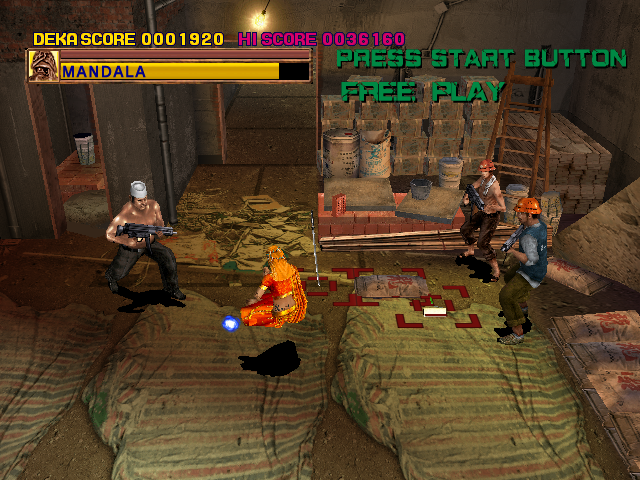
 This is an unreleased and unfinished game that came to light relatively recently. Though it's clearly unfinished, this mostly manifests as what we can generously call "presentational eccentricities" that would have presumably have been ironed out before release. Things like the very default-looking font used for a lot of the text, and things like getting a "bonus for breaking stuff" at the end of each stage. It is totally playable, though, and it's a shame that it never got officially released, because it's a lot better than most western-developed arcade games ofthe nineties.


The main thing that stands out in Danger Express is its aesthetic, which I've seen other people describe as looking like a fake videogame you'd see characters playing on a TV show. That's a fair enough description, but while I played, what came to mind for me is that it was like some long-forgotten vanity project of a straight-to-VHS no-budget action movie had somehow got a licensed tie-in videogame. All it really needs is the addition of a cutscene starring Cameron Mitchell and it'd be perfect.


What is that aesthetic? It's an amazing combination of sprite scaling and digitisation, with real life actors dressed as generic goons walking in and out of the screen. There's even some kind of psuedo-live action cutscenes! They're not really proper videos, but more like short gif-like animations using frames from a live action video. To maximize the amount of scaling that gets done, Danger Express also eschews the usual horizontal scrolling seen in most beat em ups in favour of having all the stages go into the screen like a melee-based Space Harrier. It seems unlikely, but I wonder if the developers had played the PC Engine game Jinmu Densho, which is a similar concept, mechanically at least (though to be honest, Danger Express is a much better implementation of the concept).


Naturally, then, a train is the perfect setting for such a game: lots of narrow corridors, giving a good reason as to why you're walking in a straight line through waves of enemies. So that's how it goes (except for a few outdoor excursions to backalleys, docks, or at the casino): you walk from the back of the train carraige to the front, killing everyone who tries to stop you, including soldiers, ninja, strippers, wrestlers, bikers and so on. Interestingly, some stages give you a rifle, while others are purely melee, except for the occasional inclusion of a temporary pair of nunchaku that shoot balls of lightning.


The most surprising thing about Danger Express is how good it is, though. Most games that use digitised sprites tend to be awkward, stiff and no fun to play, while western arcade developers in the nineties had a penchant for putting out cynical, hateful coin eaters. Danger Express bucks both trends! While the action isn't exactly super-smooth, it's fast and enjoyable enough to cover up the cracks, and the difficulty is actually prety reasonable: on my first attempt, I got about four stages into it (out of nine), and I think it's probable that with some practice, it could actually be 1CCed by a skilled player.

Saturday, 9 October 2021

Battle K-Road (Arcade)


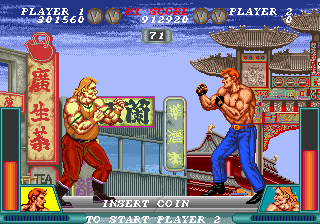
 It's odd that of the two fighting games that Psikyo developed, it's Daraku Tenshi, the one that never got released, that seems to be the most well-known. Battle K-Road is still definitely worth a look, though, as despite its psuedo realistic setting (the only fantasy elements being that two of the playable characters are cyborgs, and the final boss is a bear, plus some silly joke endings. But the mood is still realistic, and there's no fantastical or super-powered fighting techniques), it's still a game that does some interesting stuff in terms of both mechanics and storytelling.


There are seven fighting styles represented among the playable characters, with two characters for each of them. The two characters for each style are just headswaps that play identically to each other, but the only reason this setup exists is for storytelling purposes. A single player game starts with you facing against the other representative of your fighting style in a match that's implied to be the final of a tournament, with each style's first fight taking place on a unique stage. Every subsequent fight takes place on the same stage, with the time of day changing as the fights go on. The implication here is that you're playing as the proven champion of your  chosen martial art, representing that art against all the others in the Battle K-Road tournament. It's a cool little touch that adds a lot to the game's atmosphere.


Mechanically speaking, there's some interesting stuff going on there, too. Special moves are performed by holding an attack button, then pressing a direction while you release. It's an input method not often seen (the only other examples I know of are Primal Rage and the SNES Ranma 1/2 fighting games), and though I've hated it in those other games, it really works well with the grounded playstyle of this game. A more unique quirk, and a nod towards the game's combat sport theme, is that whenever a fighter gets knocked down, the fight stops and oth fighters return to their starting positions. It really marks out that the fights in this game are part of a sports competition, as opposed to the unsanctioned fights in most fighting games, and it also means that there's very little scope for trapping an opponent in the corner or in some other disadvantageous position.


Battle K-Road is a game I've been playing a lot recently, and it's really a shame it still hasn't ever had a home console release to this day, as it's a really fun and interesting game that I think must have gotten lost amongst all the other fighting games that got released during the original post-Street Fighter II fighting boom. Unfortunately, its uniqueness didn't help it stand out from the crowd,  maybe because that uniqueness manifests in the form of deliberately being less flashy and extravagant than all its competitiors. Still, you should definitely give it a try if you get the chance, it's an excellent game, that's aged a lot more gracefully than a lot of its contemporaries.

Friday, 3 September 2021

Ace Driver Victory Lap (Arcade)


 Everyone knows about Namco's arcade racing series Ridge Racer, right? But long before that, there were the Pole Position games, and from them eventually came the Final Lap games, and from them came the first Ace Driver, and this, its sequel. I was going to review both Ace Driver games, but since the first one only has one track, a graphically enhanced version of which is included in this game, I decided not to bother with it.


Ace Driver Victory Lap was released in 1995, the same year as Rave Racer, so although Ace Driver seems to have been mostly forgotten by history, it was running alongside its more popular sibling at one time. I guess the difference is that interest in Formula 1-style racing games had waned by the mid-nineties in favour of the street and mountain racing seen in Ridge Racer? Maybe that's also why Ridge Racer got home ports, but Ace Driver never did?


Anyway, you know how racing games go: you race around tracks, both against other racers and against a time limit that gets extended every time you go trough a checkpoint. There aren't any special gimmicks on display here, it's just a great-looking, competent racing game that's fun to play. I guess the slightly futuristic setting could be considered a gimmick, but it doesn't affect gameplay at all. There's no boosts or power ups or anything like that. Just a great use of colours (with an emphasis on purple, brown, and silver/grey that works surprisingly well) and a kind of eco-technological world with giant skyscrapers and machinery alongside perfectly clear skies and seemingly untarnished nature.


Unfortunately, I don't hve a lot more to say about Ace Driver Victory Lap. It's good, you should play it if you see a cabinet somewhere, or if you have a good enough computer to run it in MAME (and if I do, you almost definitely will, too, to be honest).

Friday, 2 July 2021

Ma Cheon Ru (Arcade)


 You're all familiar with Shanghai, right? The game about picking up pairs of Mahjong tiles out of a big pile in the right order? Ma Cheon Ru is based on a kind of variant of that. I can't find a name for this variant, though I think the most well-known games to feature it are the Dragon World series by IGS. 


How it works is that like in Shanghai, there is a specially-arranged pile of Mahjong tiles and you have to pick up all the tiles, with restrictions on which tiles can be picked up. Also like in Shanghai, the main restiction is that you can only pick up tiles that aren't covered by other tiles, and which have at least one of their horizontal sides untouched by other tiles, too. You aren't trying to match pairs to remove them from the game, though.


It's a pretty simple concept, but it's one that's kind of hard to explain in words. You have to match trios of identical tiles, but you don't have to pick them up together. Instead, you can hold up to six tiles in your hand (picking up a seventh that isn't the third tile of a set results in a game over), and tiles vanish from your hand when you've made a set of three. Get rid of all the tiles in the time limit and you finish the stage and go onto the next one. It's a genre I've only seen in arcade games, and pretty much all of them ramp up the difficulty very very quickly.


What makes Ma Cheon Ru stand out though, is the bonus stages (if you play it after reading this, I recommend going into the settings in MAME and setting it so they appear after every stage instead of after every third stage). There's nine different bonus stages that take the form of Tanto R-style minigames, with a wide variety of subject matter, like shooting parachutists, repeatedly punching a guy in the face, throwing objects at ugly people, and so on. They break things up pretty well, and you can get power ups for the main game if you score enough points in them. 


In fact, it seems like a lot more care and attention went into the bonus stages than the main game itself, and I wonder if the devs actually wanted to make a minigame compilation, but their publishers said that they needed to make a tile-matching puzzle game instead? We'll probably never know. Either way, I don't think this little subgenre is actually as fun as regular old vanilla Shanghai, but if you're going to play one of these games, Ma Cheon Ru at least has some mildly amusing bonus stages in its favour.

Saturday, 22 May 2021

Metamorphic Force (Arcade)


 Two unfair criticisms that are often aimed a beat em ups as a genre are that they're unfair quarter munchers, and that they're repetitive to the point of mindlessness. This might sound a little too harsh to some of you, but I think the blame for both of these can be laid at the feet of Konami's licensed beat em ups of the late eighties and early nineties: Turtles in Time, The Simpsons, X-Men, etc. I know a lot of people have a lot of nostalgia for those games, and I do too, but they definitely live up to those stereotypes more than the average beat em up (especially the western versions, which were made more difficult to squeeze those few extra coins out of players), and the popularity and ubiquitousness in the past means they're the games that a lot of people think of first when it comes to the genre. It's really a shame that the best entries Konami made in the genre came out just as it was waning in popularity: Violent Storm was one of them, and Metamorphic Force was the other.


I think most people already know about Violent Storm, with it's bizarre soundtrack and wide array of bone-crunching throws, but Metamorphic Force seems to have slipped under a lot of people's radar for some reason. The simplest way to describe it would be as a combination of SEGA's Altered Beast and Konami's X-Men beat em up. You pick one of four guys, each of whom has been granted the ability to transform into a different werebeast by the Earth goddess, and you walk across various fantasy landscapes beating up monsters until they explode into glowing goo. Each playable character has their own beast form, as opposed to each stage having a beast form ala Altered Beast, and they mostly just make you bigger, stranger, faster, and a slightly expanded movelist. Interestingly, a lot of the enemies you face are also werebeasts: lizardmen, elephantmen, hedgehogmen, and so on.


The X-Men similarities are a little more vague and difficult to describe than the obvious conceptual similarities to Altered Beast. Basically, it just really feels like the X-Men game, but with a bit more polish, and a bit more balance. It's especially evident in the boss fights: I'm sure a lot of you remember the fight against The Blob in X-Men, where the player characters can basically just pummel his to death in a few seconds? The bossfights in this, in the early part of the game, at least, are a lot like that. Still manages to be satisfying, though, the way you can beat your foes, throw them around, and even continue beating them while they're lying on the ground (especially when you play as Ban, the martial artist Minotaur, who literally dances on his enemies' prone bodies with his hooves!), Transformation occurs through collecting a goddess statue, and there's no time limit to it: you stay transformed until it's beaten out of you. Collect another goddess statue while already transformed, and you'll do a fullscreen dashing attack, a lot like Nightcrawler's super in X-Men.


The game's presentation is excellent all round. You can see in the screnshots how colourful it is, how big the sprites are, and how interesting the world and the monsters in it are, but the soundtrack is also high quality. Feeling in some parts like the music you'd hear in the background of a really great fantasy cartoon, and in others the  same kind of bombastic chiptune metal heard in the likes of Thunderforce IV on the Mega Drive. There was, according to legend, a soundtrack CD was released under the title Konami Amusement Sounds '93: Autumn Edition, but I can't find a single picture of it, a copy of it for sale, or any reference to it existing other than ones apparently copied from Wikipedia (which I think was itself copied from the old MAME history.dat). I'm sure it does exist, somewhere, but it must have been printed in very small quantities.


Metamorphic Force is a game I definitely recommend playing. If you do, though, the old rule of Konami beat em ups does still apply: play the Japanese version of the ROM and you'll have a much better time. It's never had any kind of home port, but I'm hoping that Hamster Corp. put it out as part of the Arcade Archive series at some point. They've released other nineties Konami games, so it could happen, maybe! If it ever does, it'll be a day one purchase for me.

Saturday, 24 April 2021

Tetris Giant (Arcade)


 I'm not totally sure if this game counts as obscure, but at the same time I'm thinking that it's going to mostly be arcade nerds that know about it, and even then, a lot of people will quickly write it off as a silly novelty game, and I think it deserves more than that. I'll also have to do something I haven't done on this blog in a long time: a disclaimer regarding this game's controls. The actual arcade version of Tetris Giant (also known as Tetris Dekaris) uses a projector dor its display, and is controlled by two gigantic joysticks at least the height of a human child. I, of course, have been emulating it on my laptop, and using a normal-sized USB Saturn controller. So the experiences I describe here are probably not exactly analogous to those of someone playing a real arcade machine.


I've also only ben playing single player, so I can't tell you about either the co-op or versus two player modes. Luckily, though, there are two single player modes, and both of them are a lot of fun. In both modes, there are some things that have been simplified to accomodate the unusual nature of the arcade version's controls: rather than the standard 10x20 block well, you instead have a 6x7 well, with the pieces being big and very brightly coloured. Furthermore, only when an entire piece crosses the line at the top does it count as a game over, partial pieces crossing the line are fine.


The first mode is line challenge mode, which is supposed to be the easier of the two modes, mainly because crossing the line doesn't end the game, it just erases the bottom few rows of blocks, so you're guaranteed at least two minutes of play. There's no scoring in this mode, and instead you're given two minutes to get as many lines as you can, with extra seconds added for clearing multiple lines at once. It's fun, but the lack of scores, and with it the lack of a high score table damages its long term appeal.


Luckily, the other mode, which tries to scare off timid players with a warning that it's for experts only, is score challenge. It's entirely about scoring as many points as you can before you get a game over or you reach two hundred lines. This mode does have a high score table, which features prominently as you play. It records the top one thousand scores, and it appears onscreen beside the well as a giant tower that you ascend as your score increases. The background fits the ascension theme too, starting at the bottom of the ocean, gradually rising up past skyscrapers, the sky itself, and up past the moon and into deep space. This mode is the meat of the game, and it's very addictive. A credit will only last me about five minutes, and I've still managed to play hours and hours of it. 


Even (or maybe especially?) without the giant gimmick of the arcade cabinet, Tetris Giant has still easily come to be one of my favourite versions of Tetris, and I definitely recommend giving it a try yourself. It's unlikely, but I hope it someday gets a ported to  handheld at some point, or at least a handheld Tetris game comes out that includes a mode that plays like it. One last thing to mention is that one essential thing you should do before you play (assuming you're playing via emulation) is to go into the service menu and change the music option from "instrumental" to "japanese songs". Trust me, this massively enhances an already great game.

Saturday, 13 March 2021

Curiosities Vol. 19 - Gambling 2!


 It's mostly illegal in America and Japan, but gambling is a pretty big problem in the UK, with every town harbouring several bookies and seedy "arcades" filled with nothing but fruit machines, latched onto the streets like fattened ticks. So of course, these special "prize" versions of legitimate videogames were also made for the UK market, and they have an aesthetic that shows it: in the fonts and specific shades of colours used in their graphics, there is an indescribable je nais se quois that harkens back to that kind of smoky, smelly pub that dads used to love up to about the mid nineties.


The first of the two games I'll be reviewing in this post is also the worst of the two: Prize Space Invaders is, in every way, a completely hateful game without merit. To play costs thirty pence for a "practice" game with no prizes, or fifty pence for a full game, in which it is theoretically possible to win money. How it works is that you play Space Invaders, and you're given a score quota, which adds ten pence to your prize. If you finish the stage, you're asked if you want to cash out and receive your prize or carry on, in hopes of increasing it. You only get one life, and if you die, you lose your prize. 


What's really horrible about it, though, is that the UFOs that fly across the top of the screen are now constant, and if you miss one, your score resets to zero. And on top of all that, some invaders will take multiple hits to kill, or might split into multiple invaders when you shoot them, and so on. It's a cynical, horrible game, but I think if you were some kind of Space Invaders savant, you might eventually be able to make a profit off of it. Though you'd need to be lucky too, since the score quota varies from game to game, seemingly at random.


Second up is Prize Tetris, apparently also known as Blox and Tetris Payout, and to which I have the opposite reastion to Prize Space Invaders, in a way: though I'm fairly certain it's completely impossible to win money on it, it does at least offer a mildly interesting variation on the traditional Tetris ruleset. Once again, you're supposed to be reaching a score quota to make money, though the lowest prize here is a whole pound, and the game implies it's possible to win up to twenty pounds! It's not, though. You're playing Tetris on a very short time limit, and even if you were to play perfectly, you wouldn't be able to reach the quota. It'd take at least something like seventy lines just to get to the lowest one.


What's intersting about Prize Tetris though is how points are scored. Unlike most variants, there's no extra points scored for clearing multiple lines in one go, not even for a full tetris. Instead, you scorer more points for clearing a line the higher up in the well it was. So you might try a strategy of deliberately filling the bottom few rows with junk, to score the extra points available in the upper echelons. You still wouldn't make any money, since the time limit is so short, but you might get a little closer than you otherwise would have done. Finally, just like Prize Space Invaders, the quotas and the amount of points scored per line is different every time you play, and again, it seems to be totally random. Maybe it's based on some algorithm that takes into account the amount of coins in the machine and the relative skill of past players, maybe it's just another way these games are horrible parasitic nonsense, we may never know.


If you're curious about either of the games covered in this post, then go emulate them, I guess. You're unlikely to still find working machines anywhere in the wild, and even if you do, I wouldn't recommend feeding them.

Thursday, 26 March 2020

Other Stuff Monthly #11!

Because the last post was a few days late due to technical problems, it's already that time of the month where I look at a non-videogame item of interest. Not only that, but the next post will be the annual April fools non-obscure videogame! But anyway, what's this month's item? It is at least slightly videogame related, since it's a miniature replication of a classic electromechanical arcade game from Namco!

Namely, it's a replica of Wani Wani Panic, which is also known as Gator Panic or Wacky Gator. I'm sure most of you who are old enough to remember the 1990s would have probably seen it in arcades back then. It's a whack-a-mole style game, where crocodiles come back and forth, in and out of some tunnels, and you bop as many as you can with a hammer within the time limit. The replica is a fancy papercraft kit with some plastic battery-powered innards, and unfortunately, it's not a product you can just easily buy: it was a free gift with an issue of youchien (or, kindergarten), a magazine for young children. As such, it actually came with two skins: the classic one which I used, and another one themed around the latest Doraemon movie, Eiga Doraemon: Nobita no Shin Kyouryuu (Doraemon the Movie: Nobita's New Dinosaur).

It might be a little hard to tell from my grainy PS Vita photography, but the built kit looks great. It's bright and colourful, and does a surprisingly good job of looking like the original machine, despite being made of card instead of metal and plastic. I'm very pleased with it, and I hope that it's sturdy enough to last for many years. It's not perfect, though. A big flaw is one that I won't have to deal with again: it was really hard to put together. It's not a problem I had with the very simple Panelki kit I posted about previously, but this was a much more complex kit, and there were a lot of times when I had difficulty getting tabs through slots. The problem is that you need to be quite firm, but it's scary being too firm, in case you just smash your thumb right through a panel and ruin the whole thing. I should mention that I had no trouble following the instructions, though. You put the numbered tab into its matching slot, and that's pretty much it.

The other big problem I have with the kit is that there's no randomness in how the crocodiles come out. There's a very short pattern that repeats over and over until time is up, and it makes this more of a fancy novelty ornament than a real home version of the arcade game. I know I'm being a little nitpicky with a kids magazine gift, and like I said, it is a really great-looking toy, but it's still a disappointment. Overall, though, I have to say I'm pleased with this, simply because it does look great, and someday I hope I'll be in a situation where I have lots of shelf space for it to look nice on, and I'll just keep hoping that someday I'll encounter a real one of the machines somewhere to play it again.

Finally, I have two last things to say. The first is that in the magazine itself, they're advertising that the next issue will come with another kit, for a papercraft payphone with sound-making keypad. I wonder if they do a kit every month, and if I should try to keep an eye on this magazine in case there's ever another interesting one? The other thing I have to say is that special thanks for this post goes to selectbutton forums user Dylan, for buying the magazine on my behalf and sending it to me.

Sunday, 1 December 2019

Logic Pro 2 (Arcade)

So, I've already reviewed the first and last parts of this trilogy in the past, and I've finally decided to write about the awkward middle child, which also happens to be the black sheep of the family. While Logic Pro and Logic Pro Adventure are the best nonogram games I've ever played, Logic Pro 2 rivals Oekaki Pizzle for the title of worst.

Where Oekaki Puzzle was boring and joyless in its execution, Logic Pro 2 is actively hateful. The big problem it has is that in attempting liven up their sequel, the developers thought it would be a good idea to add enemies into the mix. Now, this isn't some kind of versus mode where you race to finich a puzzle before an AI opponent, it's little creatures crawling around the grid doing stuff while you try to solve the puzzle. That "stuff" being erasing the crosses you use to mark squares that definitely don't need filling in, or adding crosses of their own, or just sitting and getting in the way.

You can kill all of the aforementioned enemies, though they respawn a short time later. Another type of enemy is unkillable, though, as it appears outside of the grid: the caterpillars that wiggle onto the screen now and then to cover up the numbers. You already have a time limit, and now you'll be wasting valuable seconds waiting for these jerks to wiggle away again so you can actually see the puzzle you're meant to be solving!

The real shame is that other than the enemies, it's mostly the same as Logic Pro Adventure: great graphics, decent puzzles, and that weird gimmick where you collect fifty little dots for a big bonus. It's just ruined by the enemies. I guess Adventure does prove that they learned from their mistakes though, which is nice. Still, don't play this game, no matter how much you're left wanting more after finishing its stablemates.

Saturday, 16 November 2019

Bay Route (Arcade)

Yes, that title does sound a lot like "Beirut", though the game is set in a generic post-apocalyptic sci-fi land, so I have no idea why they did that. But anyway, it's a game developed by Sunsoft and published by SEGA, that's a lot like Contra. As is so often the case with SEGA arcade games from this period, I have to wonder why it never got a Mega Drive release. The resemblance to Contra makes it even stranger, since that series was so popular back then, and it could have been a bit of a coup to say "our console has a game like contra, that's more colourful and better looking than anything on Nintendo's console!"

Like Contra, you play as some guy going from left to right, shooting lots of generic enemy soldiers, a fair few pieces of big enemy military hardware, and occasionally a big enemy weird monster here and there, too. The first boss is even a big barricade wall thing with guns on it, like in Contra. There's some differences, though: for example, you start with four weapons and can switch between them at any time, instead of waiting for the right powerup to come along. Also, the flamethrower is definitely the good kind of flamethrower, as opposed to Contra's rubbish fireball gun thing.

On its own merits, without comparisions to Contra, Bay Route is pretty good overall. It's nothing particularly special, just a well-designed run-and-gun game, with easily-learnable enemy behaviours, some cool set-pieces, and a nice smooth difficulty curve. It looks and sounds pretty good, though nothing mindblowing for an arcade game of its era. Obviously, it's not even slightly original, but I don't want to be too harsh on it for that, especially since it's of a pretty similar quality to the series it's ripping off, rather than being significantly worse. Unfortunately, that averageness makes it kind of hard to write about.

I guess I can recommend playing Bay Route? You won't be missing out on a great deal if you don't, but you'll have a decent enough time if you do. It's hard not to be on the fence about this game; there's a lot of reasons why a game might fade into obscurity, and this one clearly did just because it's so completely unremarkable.